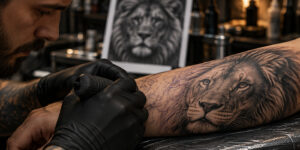
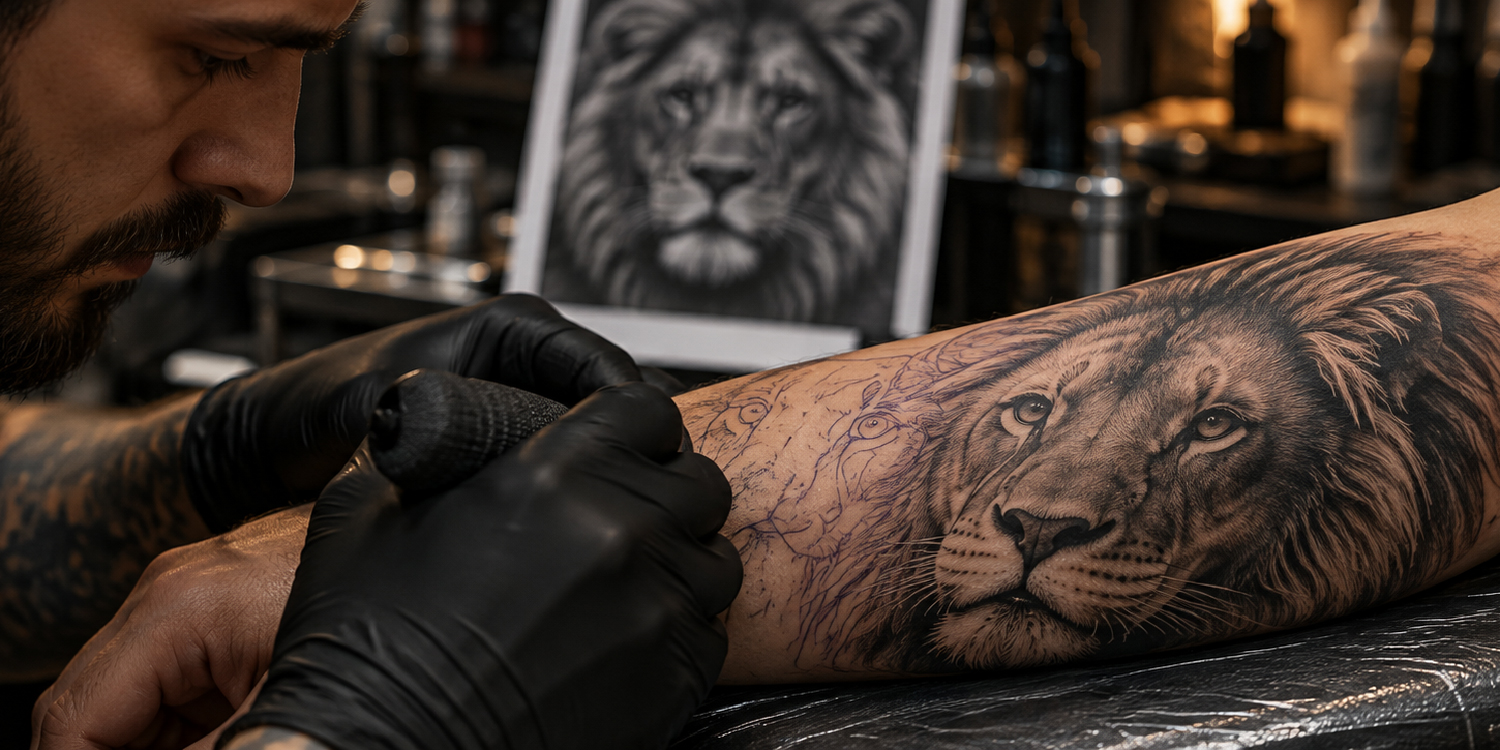
Have you ever wanted a realistic tattoo? Realistic tattoos are among the most impressive forms of body art. They replicate real photographs, portraits, animals, objects, and scenes accurately. Modern realistic tattoos look three-dimensional, capturing every small detail from the shadows to the texture. Skilled tattoo artists may make these tattoos look simple, but achieving this level of precision is far from easy. Behind every realistic tattoo is an artist who must overcome technical, artistic, and practical challenges throughout the design and tattooing process.
The process starts with interpreting a flat surface reference image into a realistic tattoo on a curved surface while ensuring that the tattoo ages gracefully over time. The process requires a high degree of skill, patience, and expertise. If you appreciate realistic tattoos, this blog helps you appreciate the craftsmanship involved. It serves as a guide to choosing the right tattoo artist for your needs.
Finding the Perfect Reference Image
Let’s start with the reference image. Poor-quality pictures make it difficult for the artist to capture the finer details. Blurry pictures from the past are not the ideal reference for tattoo artists. Photos with low lighting can hide important shadows and textures that are the ingredients for good realistic tattoos. Sometimes, multiple reference images may be required to fill in all the details for the best results.
Heavily filtered social media images are best avoided. Reference image angles can be challenging for certain placements. Often, certain images are protected by copyright laws, and their use can be limited. Some images have to be digitally enhanced before they can be used as a template for the tattoo. What makes portrait tattoos stand out are the eyes. The reference image has to have clear visibility of the eyes. For realistic tattoos of animals, visible fur texture is crucial. Too many background elements can distract from the main object. Skilled tattoo artists know what details are essential and avoid unnecessary elements.
Translating a Flat Image onto a Curved Body
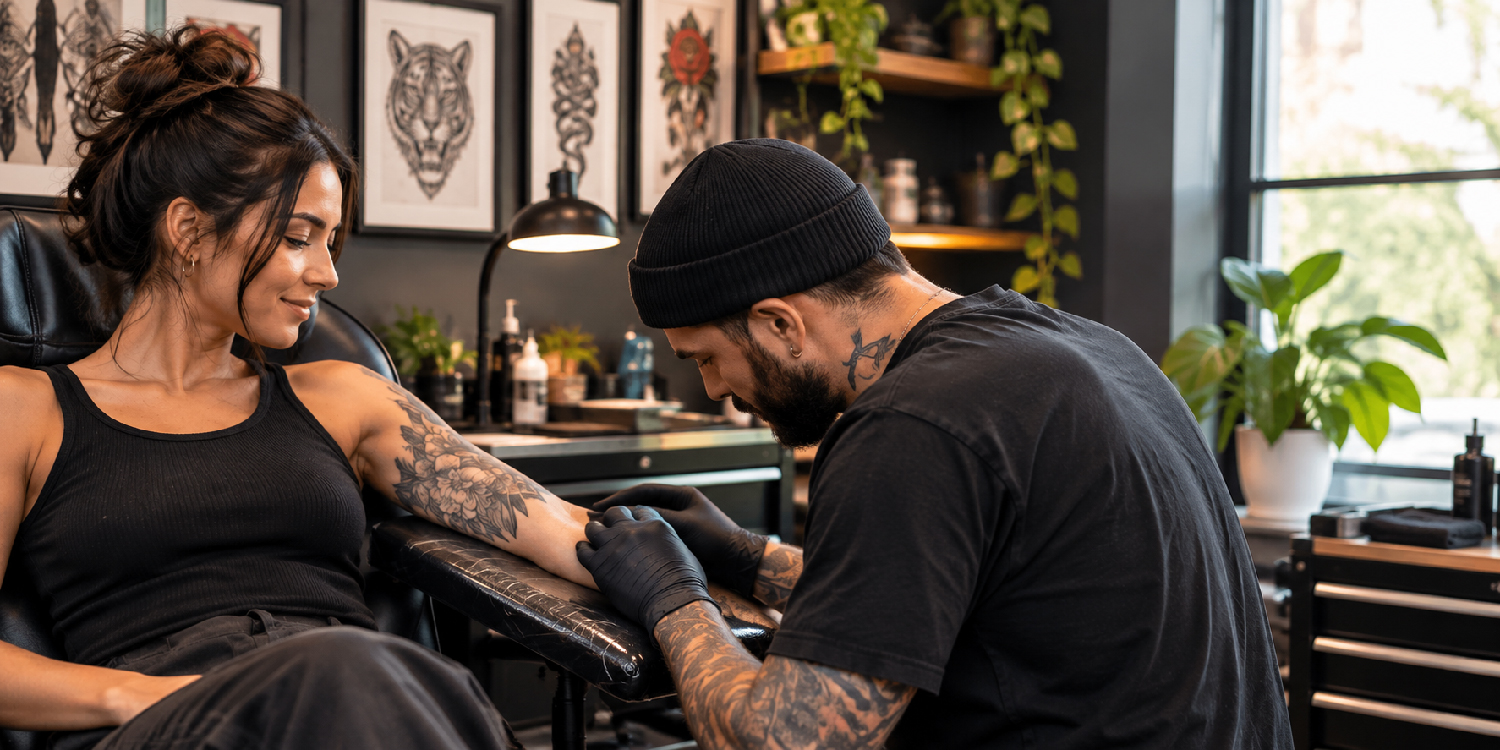
The challenge of realistic tattoos is to make them come alive on your skin. Arms and legs have to be cylindrical rather than flat surfaces. Recreating muscle contours is especially challenging. If not done skilfully, the image’s proportions can look distorted. The placement of such tattoos plays a vital role in the outcome. The skin stretches differently over time and can make the tattoo look less than perfect. Body movements can also change how the tattoo appears.
Symmetry is easy in two-dimensional images. But when it comes to three-dimensional tattoos on curved body parts, artists have to consider many factors. Large pieces have to maintain the visual flow. Another challenge tattoo artists face is ensuring that the design looks correct from multiple viewing angles. When the placement is on the wrists or ankles, there is little space for artists to work on. Joint areas create uneven tattooing surfaces.
Placement on the ribs has to take into account the expansion and contraction of the area. Artists redesign images to fit the body contours.
Achieving Accurate Facial Features in Portrait Tattoos
What makes realistic tattoos stand out? The attention to detail. Even minor mistakes can change a person’s appearance. The feature that can make or break the tattoo is the eyes. It requires plenty of skill and precision. Smile lines and expressions are difficult to capture and require a combination of skill and experience to make them look realistic. Have you seen tattoos where each hair strand looks real? That work requires intricate detailing.
Skin tone transitions need smooth shading. Portraits can be challenging for artists because family members can spot inaccuracies quickly. Even tiny asymmetries become highly visible. Expressions must seem authentic for realistic tattoos. Tattoo artists need high observation skills to deliver the best results.
Mastering Light, Shadow, and Contrast
Have you ever tried to sketch a person? Lines and curves can help you recreate an image, but what truly makes it come alive is the contrast, light, and shadows. Shadow work is crucial for realistic tattoos. Poor contrast can make tattoos appear flat. Too much black ink can overwhelm the image. The light source has to be consistent throughout the tattoo. Reflections require careful thought and planning.
Highlights have to be strategically placed. The contrast has to be right for skin undertones to be perceived accurately. Smooth blending is required for tone transitions. For metallic objects, specialised shading has to be used. Dark areas can merge over time, so tattoo artists have to balance dramatic effect with longevity.
Reproducing Fine Textures Realistically
Many details of realistic tattoos require technique and precision. For realistic tattoos of animal portraits, the fur has to have directional consistency. For people, each hair strand has to appear natural. Skin texture has to be tattooed carefully. For designs with fabric and feathers, artists need to create depth and precise linework. Any textured surface poses its own challenge. Skilled tattoo artists understand what technique to apply for different textures, such as wood, stone, and metal.
It is true that certain textures age better than others. Most artists simplify textures without losing realism.
Working Within the Limitations of Human Skin
The canvas of tattoo artists is human skin. Unlike paper or canvas, skin is dynamic. Different skin types accept ink differently. If the placement is on areas where the skin is thin, gentler techniques are used. Oily skin can pose a challenge for stencil application. Sensitive skin has to be handled carefully. Stretch marks can affect the details. Scars on the skin can alter ink retention.
Different skin types heal differently. When using colours, the skin tone has to be considered before deciding on the colours. Certain areas bleed more during tattooing. Mature skin may require modified techniques. Every client is different, and artists modify their technique accordingly.
Maintaining Detail in Large and Small Realistic Tattoos
Small tattoos can limit the level of detailing that is possible. The tattoo ink can blur over time, and including too many details in small tattoos can distort the image as the tattoo ages. Large pieces can accommodate extensive detail. The level of detail should match the tattoo size.
Negative spaces can be used to add depth and detail. The tattoo has to be readable from a distance. Artists try to balance long-term clarity with artistic expression.
Ensuring the Tattoo Ages Well
As the tattoo ink settles into the skin, it softens over time. Fine details can blur. High-friction areas wear faster. Tiny highlights can disappear over time. Sun exposure accelerates tattoo fading. Intricate details can merge together. Tattoo artists plan the tattoo design and placement so that it ages well. Touch-ups may eventually be necessary to maintain the results.
Last Ink
Realistic tattoos are not as simple as copying an image onto your skin. It is much more complex. Tattoo artists need a good understanding of anatomy and skin limitations. The best results are delivered by artists who have technical precision, experience, and a commitment to continually upgrading their skills. Every shadow, texture, highlight, and detail requires careful planning and execution. At Colibri Tattoo and Piercing, our tattoo artists are highly recommended by happy clients who keep returning for more. Visit our website, Colibri Tattoo and Piercing, to learn more.