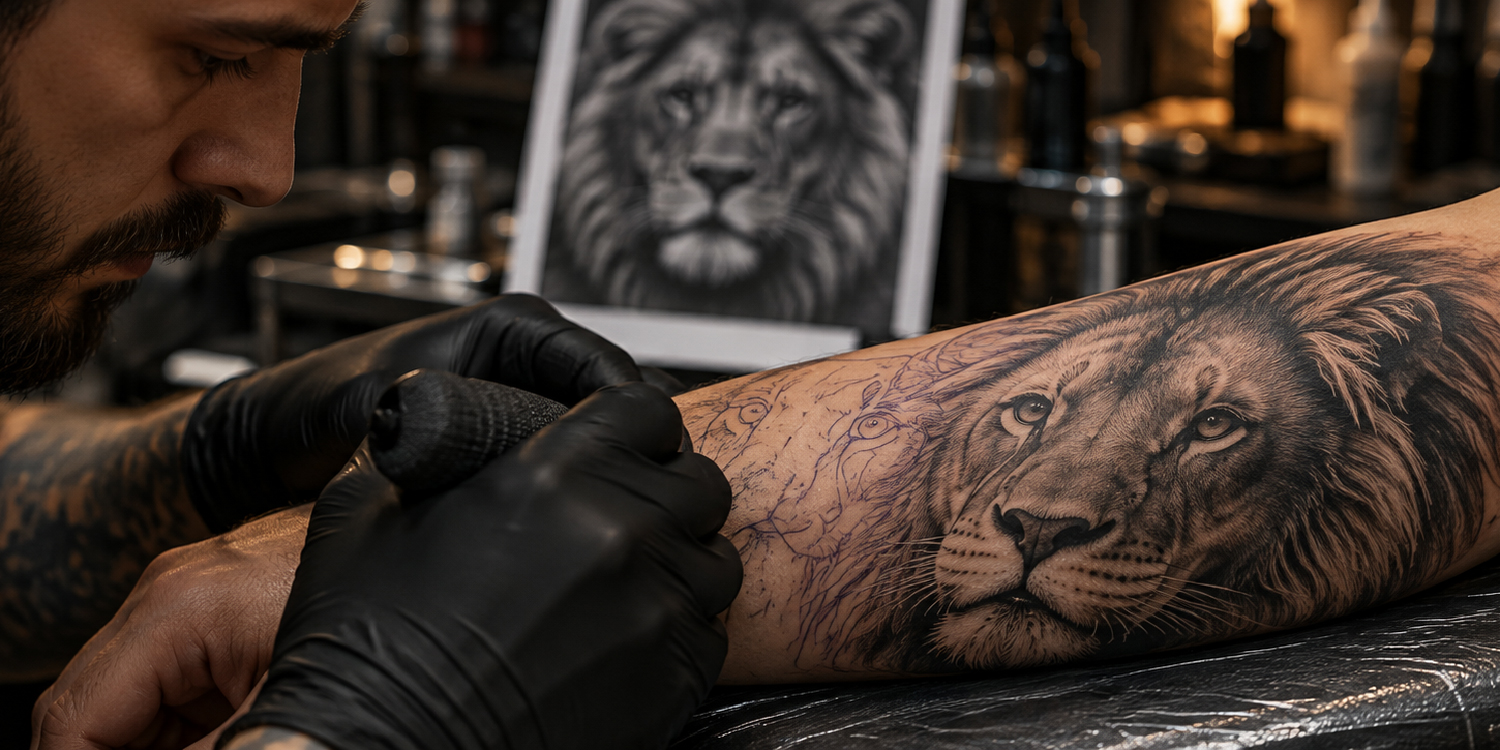

Imagine explaining your dream to someone who wasn’t there. Explaining a tattoo idea to a tattoo artist can feel much the same. You know what the tattoo means to you and have an image of how it will look on your skin. The brief a tattoo artist receives usually consists of reference pictures and a handful of sentences. The artist is expected to take on the important task of turning your thoughts, even when expressed vaguely, into a design that works for you.
Most creative tattoo designs begin as a collage of thoughts. Clients might want a blend of a Pinterest image, a memory they cherish, different styles they love, and no clear idea about where to place the tattoo. That’s perfectly fine. You don’t have to speak like an art director or provide perfectly organised instructions to develop a design. This blog helps you understand which details you need to communicate so that a tattoo artist can create a design that appeals to you.
Start by Identifying the Main Idea Behind Your Tattoo
Even if all you have is a vague idea about the tattoo design, identify what the tattoo will depict by distinguishing the subject of the tattoo from its emotional meaning. If possible, try to summarise the tattoo in a single line. For instance, it would help the tattoo artist if a client said, “I want a tattoo of a small mountain range to represent my first solo hiking trip.”
Artists like a starting point for the design – one element of the tattoo design that is non-negotiable. Not every detail of the tattoo can have the same level of significance. The central theme is the most important detail. The supporting elements can be added to create a cohesive design. It is better to explain to the artist whether the tattoo represents a person, place, memory, or idea. Each one requires a different approach. Artists need to know whether the tattoo’s symbolism should be clear or remain personal.
Describe the emotion you want the tattoo to evoke; it can be peaceful, rebellious, nostalgic, playful, mysterious, or anything else. Prepare a short verbal summary to communicate the subject, meaning, and essential features of the tattoo.
Use Reference Images Without Expecting the Artist to Copy Them
A good tattoo artist likes to create a design. Choose a reference image that comes closest to the overall concept of your tattoo. Select reference pics that illustrate the composition, linework, or shading details that you prefer. Explain to the tattoo artist which feature of the design appeals to you. It could be curved stems, negative space, or a facial expression. This gives the artist more clarity.
Show the artist what you clearly dislike. Avoid contradictory references. If the artist’s portfolio has references that seem relevant, it can be helpful to show the artist relevant examples from the portfolio. Be clear that the image has to be interpreted and not duplicated.
Describe the Tattoo Style You Want in Practical Terms
It is better to do some research about the basic tattoo styles to understand what suits you. Knowing the names of the broader styles, such as traditional, neo-traditional, fine-line, or geometric, can be helpful for the artist. Describe the line weight you prefer. This could include delicate outlines, bold borders, or a mixture of both. You should also explain the type of shading you prefer. Options include gradients, dotwork, cross-hatching, or solid black areas.
Let the artist know how much visual detail you prefer. Let the artist know whether you like symmetry or organic movement. Decide whether you like to keep the scale realistic or exaggerated proportions. If you prefer ornamental elements, explain what kind of ornamentation you like. If there are any unfamiliar terms that come up while discussing the tattoo idea with the artist, ask them to show you examples instead of pretending that you understand.
Explain the Size and Placement You Have in Mind
If you have any preferred area for the tattoo, communicate it to the artist. Be specific about the area, such as the inner forearm, outer upper arm, or shoulder blade. Explain why that placement appeals to you. Estimate the tattoo’s size and communicate it to the artist.
Artists may need room to adjust proportions, so relay your ideal size and maximum size to the artist. Discuss the orientation of the tattoo and explain if you would like the tattoo to follow the body’s natural contours. People who get affirmations inked on them choose the inner wrist so that they can see the words regularly. Nearby tattoos can influence the spacing of a new tattoo, which needs to fit in with the existing artwork. Mention any placement restrictions that you may have.
Be open to any modifications the artist may suggest. Their advice about placement and sizing may be valuable.
Communicate Your Colour Preferences and Visual Contrast
Tattoos can be done in black and grey or in colour. Just as an artist considers the colour palette for a piece of artwork, you should have an idea of which colours you want in your tattoo. Browse colour tattoo designs to explore the available colour options. Some people like muted colours while others prefer bright, saturated colours.
If you want to balance colour and a black-and-grey aesthetic in your tattoo, relay the idea clearly to the artist. If there are any colours that you do not want in your tattoo, communicate that to the artist. Ask the artist how the colours you prefer may appear on your skin tone.
Explain the Emotional Meaning Without Turning the Consultation into a Guessing Game
Every tattoo has a story behind it. Help the tattoo artist understand the story behind your tattoo. If there is an emotion you would like to express through your tattoo, communicate it to the artist. Good tattoo artists try to understand the story behind a client’s tattoo during a consultation.
Understanding the emotion behind the tattoo helps an artist interpret the design better. Share only the information relevant to the tattoo design. You do not need to disclose painful or sensitive details if the visual brief can be explained without it.
Be Clear About Your Boundaries and Non-Negotiables
If there are any elements that you are specifically averse to, relay that to the tattoo artist. Explain to the artist which parts you are open to redesigning freely. Set clear boundaries about any imagery that you do not want to feature in the design.
Do not hesitate to discuss the budget range you are comfortable with. A good tattoo is a collaboration between the client and the tattoo artist. Be open to the artist’s suggestions and be clear about which areas are negotiable and which are not.
Conclusion
A tattoo artist can create art but cannot read minds. Before you approach a tattoo artist, have a clear idea about your preferences and keep a few reference pics to communicate your idea to the artist. Stick to a central theme and do not be tempted to change it halfway. Communicate your idea clearly and do not confuse the artist with too many conflicting requirements.
Artists at Colibri Tattoo and Piercing try to capture the client’s vision and turn it into beautiful art. Visit us to bring your tattoo idea to life.