Tattoos are stories inked on skin. Each tattoo is a testament to a journey, philosophy, or metamorphosis. Tattoo artists are creators who translate a vision into visual art. For tattoo artists, the canvas is skin. Unlike paper, skin is not a flat, white canvas. It is a living, changing surface. It stretches, moves, and ages.
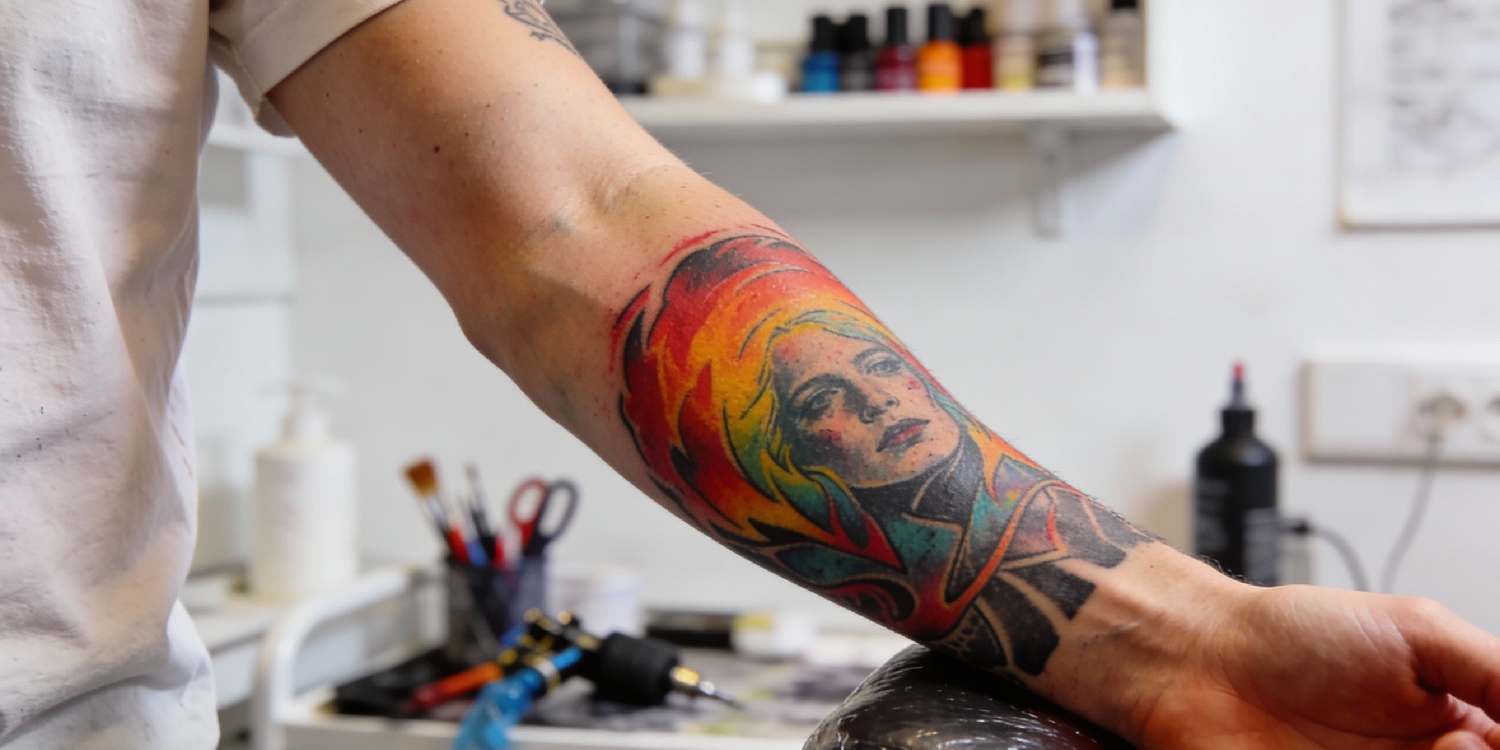
Tattoo designs used to be 2 dimensional. But today, tattoo artists create realistic 3D designs that seem to be living on the skin. For some designs, tattoo artists use lots of colours. Tattoo colours behave differently from paint or digital designs. A design with many colours will need to be modified to suit different skin tones.
Climate, lifestyle, and skin diversity influence colour choices. This blog explores how tattoo artists select colours for different skin tones.
Understanding Skin as a Dynamic Canvas
The skin has three layers: epidermis, dermis, and hypodermis. Tattoo artists pierce the epidermis to deposit ink in the dermis. Ink molecules stay in the dermis permanently. The hypodermis is the deepest layer. Artists avoid hypodermis to prevent smudging or “blowouts”. The body’s immune cells try to remove the foreign ink, but the ink molecules are too large. The cells engulf the ink molecules, and they get trapped in the dermis. The pigment is thus locked in place with fibroblasts and collagen.
The body treats a tattoo as a wound. Blood flow increases in the area to deliver oxygen and immune cells to promote healing. This process influences the brightness of the tattoo. A tattoo looks vibrant on skin with good circulation. Proper aftercare assures good healing, which is essential for good results.
The skin on different parts of the body varies in elasticity, thickness, and texture. Tattoo artists have knowledge about skin across the body and can guide you about the placement of tattoos for the best results.
Melanin does not block the colours of a tattoo; it filters them. Tattoo artists adjust the contrast lines, line weight, and colour placement according to the skin tone. Tattoo artists advise clients about aftercare depending on seasonal conditions. Proper hydration, moisturising, and protection from harsh weather help preserve colour all year round.
Colour Mixing for Tattoos vs Traditional Art
Colour theory in tattooing works differently from that in painting. In traditional art, the colours are mixed in proportions that appear the same on paper. But tattoo artists mix colours deeper than they are intended. This is because the tattoo is not viewed on the skin but rather through it. Once the tattoo heals, a layer of skin develops on the ink, and it can mute or alter the tone of the colours. Tattoo artists have to mix colours, taking into account the healing factor.
Tattoo ink cannot be blended on the surface, unlike traditional art. Artists layer, space, and saturate the ink to blend the tattoo colours. Negative space is used as a tool. It uses the skin as a highlight. Black and grey are used to anchor colour and create contrast.
Placement and Movement: Colour in Motion
Tattoo artists understand that skin is not static. Tattoo artists must consider how colours behave on skin in motion. Areas with frequent movement, such as shoulders, knees, elbows, and ribs, experience more friction than others. Colours might fade faster or lose sharpness in these areas. Artists adjust saturation and spacing in these areas to retain the colours. They also use high-contrast colours and simple colour schemes to maintain longevity.
Another factor to consider is muscle structure. Tattoos should look balanced on the skin, even when the muscle bends or twists. Tattoo artists decide placements based on the body contour.
Climate, Lifestyle, and Sun Exposure
The climate plays a role in how a tattoo heals and ages. UV exposure is one of the leading causes of tattoo colour fading. The colours that are most impacted are yellows, light blues, and soft pastels. Even in cooler regions, sun exposure during the summer months can fade tattoos.
Seasonal clothing habits can affect tattoos. Frequent exposure during the summer can fade tattoos. Winter clothing and dry indoor air can cause dehydration of the skin and affect the tattoo.
Tattoo artists take into account the client’s lifestyle when recommending colour palettes and placements.
Tattoo artists educate clients about proper aftercare for the best results. Sunscreen and moisturiser should be part of long-term skincare.
Contrast, Not Brightness: The Real Secret to Long-Lasting Colour
Most people believe that brighter colours will lead to more vibrant tattoos. Experienced tattoo artists know that contrast is far more important than brightness.
For the tattoo colours to really look vibrant, artists use strong outlines, intentional spacing, and darker tones to highlight and separate the colours. This contrast can be achieved by pairing light colours against dark or warm colours against cool. Vibrancy can also be achieved by using bold colours against neutral. This ensures that even as the tattoo settles and the colours soften, the tattoo remains vibrant and striking.
Using deeper colour tones may look impressive when the tattoo is fresh, but it can lose definition over time.
The Psychology of Colour in Tattoo Design
Colours have an impact on our psyche. Tattoo artists understand the psychological responses different colours evoke. Reds and oranges are intense and evoke energy. Blues and greens are calming colours that evoke balance.
Colours have a cultural context. In diverse communities, colours carry a personal or symbolic meaning.
Experienced tattoo artists guide clients about colour palettes that align with their story and personality. With colours that align with your story, the tattoo will resonate with you years down the line. This emotional intelligence is often overlooked.
Healing, Ageing, and Colour Evolution Over Time
The way a tattoo looks on the day it is inked and years down the line will not be the same. The vibrancy of the tattoo depends on the healing and aftercare. Some pigments fade faster than others. Reds and yellows soften sooner than darker colours.
As skin ages, collagen breaks down, skin texture changes, and the clarity of colours mellows. Tattoo artists understand this gradual change and design tattoos that can be refreshed with touch-ups. They try to avoid colour choices that rely solely on short-term vibrancy.
Common Colour Mistakes Non-Experts Make
Experienced tattoo artists know how to make colours work for their clients, but good experienced tattoo artists know what not to do.
Some common mistakes that artists make are:
- Not considering undertones
- Overloading skin with pigment
- Not considering placement
- Not considering the tattoo settlement factors
Following colour trends without understanding contrast and structure is not advisable. Aftercare is another factor that some tattoo artists do not emphasise or guide clients on. Improper healing can ruin a good design.
Colour Theory is a Core expertise of Professional Tattoo Artists
Good tattoo artists need artistic knowledge, skill, and knowledge of biology. Artists do not just ink on your skin; they make designs that settle and age along with your body.
From consultation to aftercare, every step is important in how the colour appears and stays on your skin. If you are looking for the best tattoo artists to add colour to your tattoo, visit Colibri Tattoo & Piercing today!